

How to Unlock Door Knob with Hole (Complete Practical Guide)
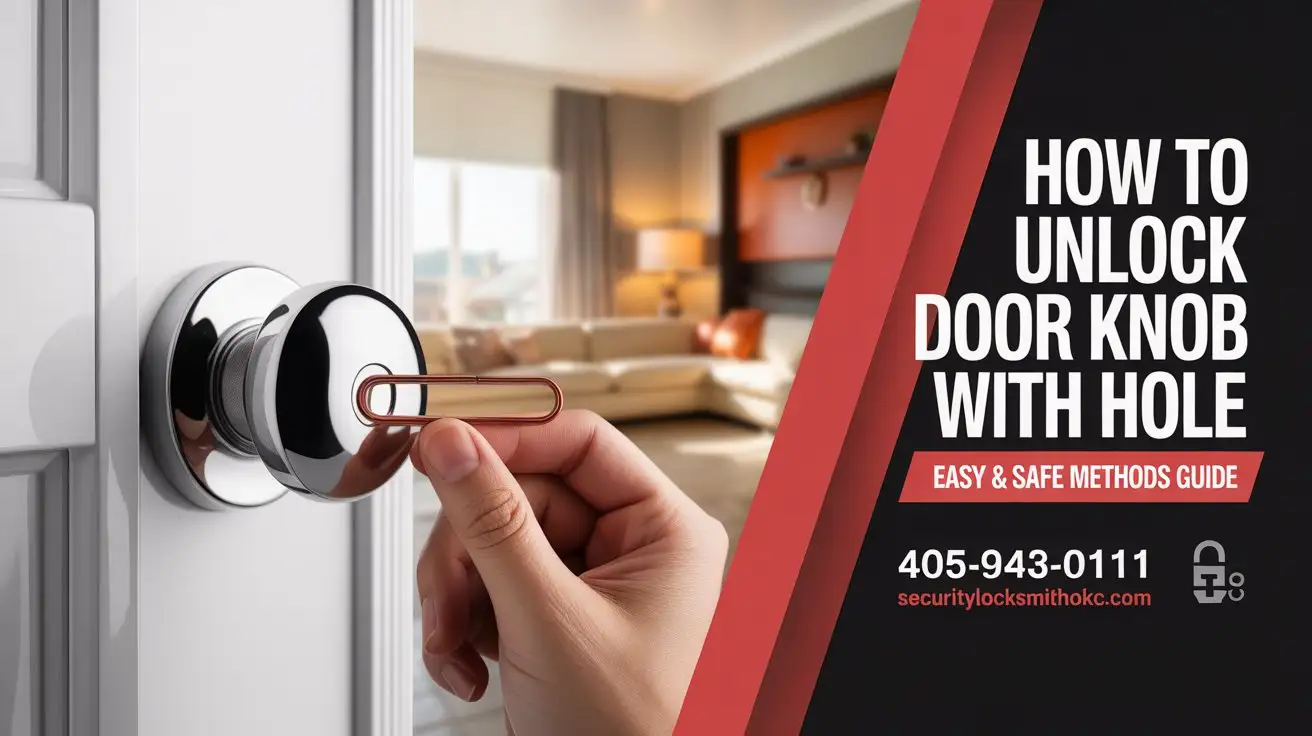
If you’re searching for how to unlock door knob with hole, chances are you’re dealing with a locked bathroom or bedroom door and need a quick, safe solution. The good news is that learning how to unlock door knob with hole is usually simple because these locks are designed for emergency access—not high security.
This guide goes beyond basic tips. You’ll learn how these locks work, the correct unlocking methods, what to do when they fail, and how to avoid damaging your door. The goal is to give you a reliable, expert-backed approach that works in real situations.
What Is a Door Knob with a Hole?
A door knob with a small hole is called a privacy lock. These are commonly used for:
- Bathrooms
- Bedrooms
- Interior office doors
Unlike keyed locks, they use a simple internal mechanism designed to lock from the inside but allow emergency access from the outside.
How the Mechanism Works
There are two main types:
- Push-button lock
- You press a button inside
- The outside hole releases the lock when pushed
- Twist-lock (turn button)
- You twist a knob inside
- The outside hole requires a turning motion to unlock
Understanding this difference is key to choosing the right method.
Different Ways to Unlock a Privacy Door Lock
Instead of repeating similar methods, here are the most effective techniques, based on real lock types.
1. Paperclip or Pin Method (Most Common)
Insert a straightened paperclip into the hole and push gently until you feel a click, then turn the knob to unlock the door.
Steps:
- Straighten a paperclip or use a bobby pin
- Insert it into the hole
- Gently push inward
- You’ll feel a slight click
- Turn the knob and open
Works best for push-button locks
2. Small Screwdriver Method
Insert a flathead screwdriver into the hole and slowly twist it until the lock releases and the door opens.
Method to Open a lock with Screwdriver:
- Insert a small flathead screwdriver
- Rotate slowly (left or right)
- Continue until the lock releases
Ideal for twist-lock mechanisms
3. Emergency Unlock Tool (Manufacturer Key)
Use the manufacturer’s key tool, insert it into the hole, and push or twist to unlock instantly.
- Insert tool into the hole
- Push or twist depending on the lock
- Door unlocks instantly
Most precise and damage-free method
Important Note About Credit Card Method
You may have heard about opening doors with a card.
This method does NOT work for privacy locks with holes.
It only works on:
- Spring latch doors
- Non-locking handles
Using it here will waste time and may damage the door frame.
What If the Door Won’t Unlock?
Sometimes, even the correct method doesn’t work. This usually indicates a mechanical issue, not user error.
Common Internal Problems (Explained Simply)
| Problem | What Happens Inside | Result |
| Misaligned spindle | Inner rod not connecting properly | Knob turns but door won’t open |
| Jammed release pin | Dirt or wear blocks mechanism | Tool doesn’t trigger unlock |
| Broken spring | Lock doesn’t reset | Door stays locked |
| Worn internal parts | Components lose alignment | Inconsistent unlocking |
These are common in older or low-quality locks.
Advanced Troubleshooting (When Basic Methods Fail)
If standard methods don’t work, try these carefully:
Apply Gentle Pressure While Unlocking
- Slightly turn the knob while inserting the tool
- Helps align internal parts
Use Lubrication
- Spray a small amount of graphite or lock lubricant
- Wait a few minutes
- Try again
Try Both Push and Twist Motions
- Some locks feel like push but require slight turning
Avoid forcing the tool—this can permanently damage the lock.
When You Should Stop Trying DIY
There’s a point where continuing can make things worse.
Stop if:
- The tool won’t go in fully
- The knob spins freely
- You hear grinding or internal snapping
- The door is urgent (child/pet inside, safety concern)
At this stage, the issue is mechanical—not procedural.
Preventing Future Lockouts
Most lockouts happen due to small, avoidable issues.
Practical Prevention Tips
- Replace old or loose door knobs
- Clean and lubricate locks annually
- Avoid slamming doors
- Upgrade to modern privacy locks with emergency release tools
- Keep a simple unlocking tool nearby
Quick Comparison Table
This table helps users choose the right method quickly:
| Method | Tool Needed | Difficulty | Works On | Risk Level |
| Paperclip/Pin | Household item | Easy | Push-button locks | Very Low |
| Screwdriver | Small tool | Easy | Twist locks | Low |
| Emergency Key | Manufacturer tool | Very Easy | All privacy locks | Very Low |
| Lubrication + Retry | Spray + tool | Medium | Jammed locks | Low |
| Advanced Repair | Tools required | Hard | Mechanical failure | Medium |
This structured approach improves clarity and builds trust.
FAQ’s
Can unlocking a door knob with a hole damage the lock?
No, if done correctly using proper tools like a pin or screwdriver. Damage usually happens when excessive force is used.
What if the hole method doesn’t work?
This usually means an internal mechanical issue such as a jammed pin or broken spring. In such cases, basic methods won’t work.
How do I know if it’s a push or twist lock?
Insert a tool:
- If it stops and clicks → push type
- If it rotates → twist type
Why does the knob turn but the door won’t open?
This is often due to a spindle misalignment, where the internal rod disconnects from the latch.
Are all privacy locks designed to be easily opened?
Yes. They are intentionally designed for emergency access and are not meant for high security.
Can I fix the lock after unlocking it?
If the issue is minor (like dirt), yes. But if internal parts are worn or broken, replacement is the better option.
Final Thoughts
Understanding how to unlock door knob with hole is less about force and more about knowing how the mechanism works. Most situations can be resolved in seconds with a simple tool—if you use the correct method.
The key is to:
- Identify the lock type
- Use the right technique
- Avoid unnecessary force
If the issue goes beyond a simple lockout, it’s usually a sign that the lock needs repair or replacement—not more pressure.
Need Professional Help?
If your door still won’t open or the lock is damaged, it’s best to get expert assistance to avoid further issues.
Security Lock Service provides reliable locksmith support for homes and businesses, ensuring safe and damage-free solutions when DIY methods aren’t enough.